Can You Omit a Local MCB for SPDs in Domestic Installations?
A Practical Guide for Installers
When it comes to surge protection devices (SPDs), one question keeps coming up on site:
“Can I connect an SPD directly to the busbar and rely on the DNO fuse?”
This guide cuts through the noise and gives you a clear, standards-backed answer, so you can make the right call quickly and confidently.
The Short Answer
Yes, but only under strict conditions.
In residential installations, you can omit a local MCB/fuse for an SPD only if all of the following are met:
- The installation is domestic (household or similar)
- The SPD complies with BS EN / IEC 61643-11
- The manufacturer explicitly allows omission of local overcurrent protection
- The upstream DNO fuse is ≤125A
If any of these conditions are not met, you must use a local OCPD.
Why This Works (When Done Correctly)
This approach is based on recognised industry guidance and two key engineering principles:
1. Controlled Failure Mode (Designed to Fail Safe)
SPDs are sacrificial devices, they degrade over time due to surges.
They can fail in two ways:
- Open circuit (preferred)
- Device isolates safely
- Indicator shows replacement needed
- No loss of power to the installation
- Short circuit (undesired, rare)
- Fault path created
- DNO fuse may operate → full board outage
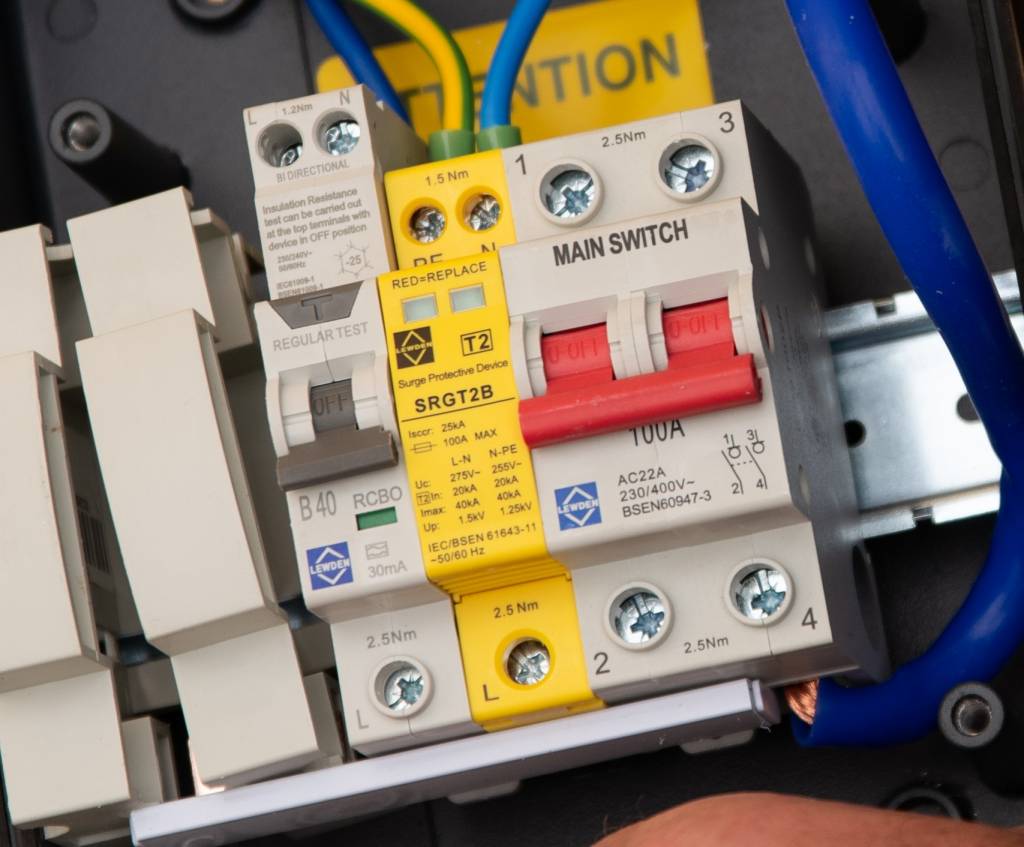
Lewden SPDs are engineered so that open circuit failure is overwhelmingly the outcome, minimising disruption.
2. Short-Circuit Withstand Capability
A key requirement is ensuring the SPD can handle fault conditions safely.
- Lewden SRGT2B has a short-circuit rating of 25kA
- Typical domestic installations have a maximum prospective fault current of ~16kA
Result:
The SPD can withstand fault conditions without damage, allowing protective devices to operate correctly.
Why Older Designs Used a Dedicated MCB
Previously, SPDs were installed with a dedicated MCB (OPCD2) to:
- Provide short-circuit protection
- Enable busbar connection
- Allow isolation for maintenance
- Ensure selectivity with the DNO fuse
However, this introduced a limitation:
- High surge currents (e.g. 20kA) could damage a 6kA MCB, restricting SPD performance
What Changed?
Industry guidance (via Electrical Safety First and JPEL alignment) clarified that:
In domestic installations, the upstream DNO fuse can act as the SPD’s backup protection, if all conditions are met.
This enabled:
- Direct busbar connection
- Removal of unnecessary MCBs
- Simpler, cleaner installs
Lewden’s Design Approach
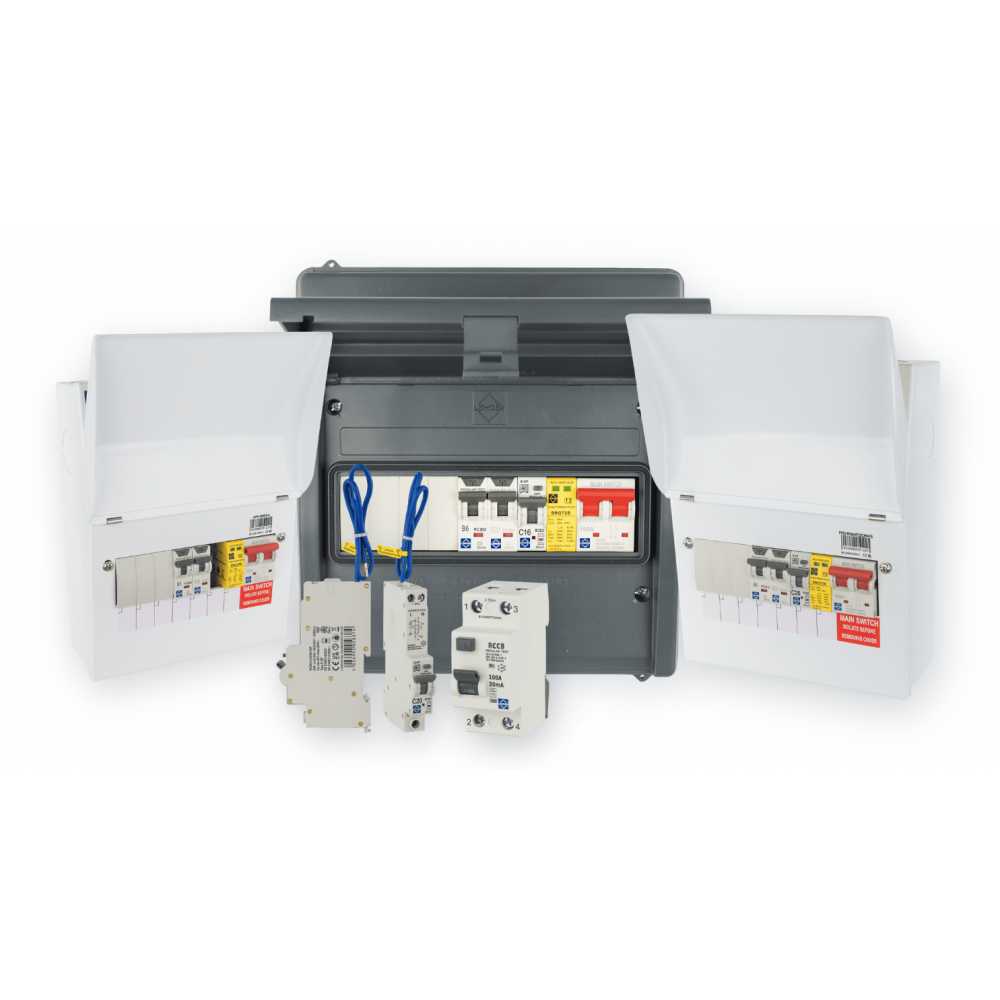
Lewden’s current SPD design (SRGT2B) is built around this guidance:
- Direct busbar connection capability
- No dedicated MCB required (when conditions are met)
- 25kA short-circuit withstand rating
- Designed for ≤100A upstream protection (typical DNO fuse)
- Plug-in cartridge for quick replacement
- Visual and remote end-of-life indication
Just as important:
- Extensive testing shows short-circuit failure is very rare
- This reduces the likelihood of DNO fuse operation and total outage
Where You CANNOT Use This Approach
Do not rely on the DNO fuse alone in:
- Commercial or industrial installations
- 3-phase systems
- Installations with higher fault levels (up to 100kA)
- Any SPD where the manufacturer does not permit omission of local protection
In these cases, local OCPD is mandatory.
Quick Installer Checklist
Before omitting the MCB, ask:
✔ Is this a domestic installation?
✔ Is the SPD compliant with BS EN / IEC 61643-11?
✔ Do the manufacturer’s instructions allow omission?
✔ Is the upstream fuse ≤125A?
If the answer is YES to all → you’re good to proceed.
Final Word
This isn’t about cutting corners, it’s about:
- Following recognised guidance
- Using correctly designed equipment
- Understanding the risk envelope
Done properly, this approach delivers:
- Cleaner installs
- Reliable protection
- Reduced nuisance outages
And most importantly, confidence on site.